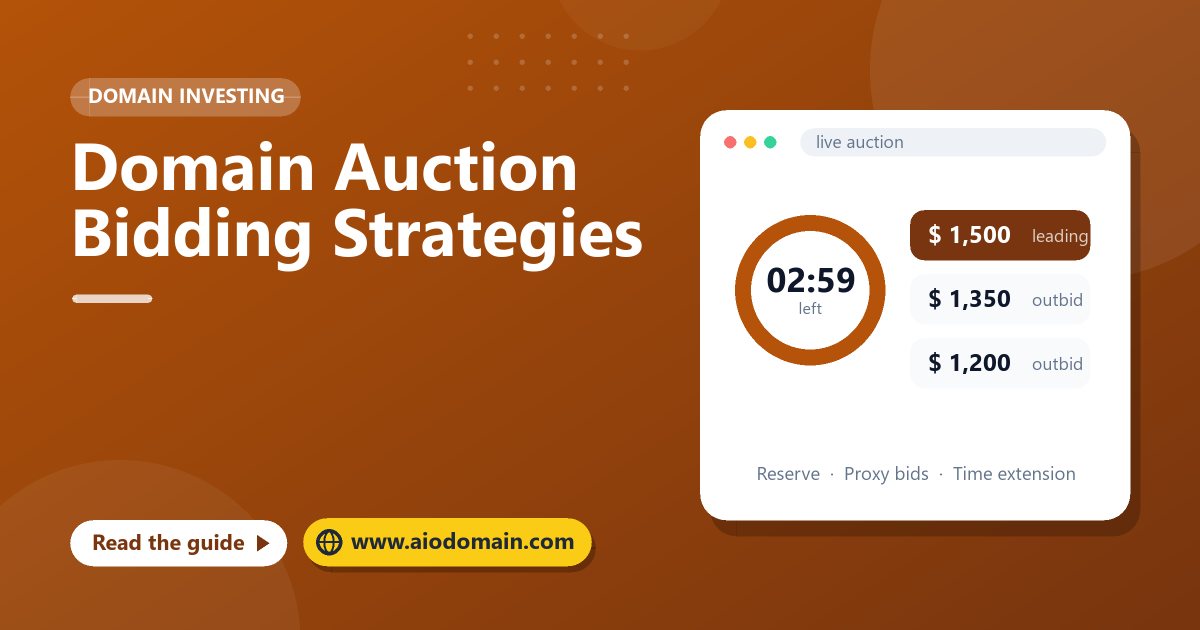
An auction turns a slow negotiation into a short, transparent race. Buyers see exactly what others are willing to pay, sellers get a deadline, and the name goes to whoever values it most. But auctions reward preparation. Here is how they work and how to play them well, from either side.
Key takeaways
- Set your maximum bid before the auction starts, and respect it.
- Proxy bidding lets the system bid for you up to your limit.
- Late bids extend the auction, so last-second sniping rarely works.
- Sellers: a sensible reserve and a low starting price attract more bidders.
How a domain auction works
- Starting price: the first acceptable bid.
- Reserve price: a hidden minimum. If bidding ends below it, the seller does not have to sell.
- Bid increments: the minimum step between bids, which grows as the price rises.
- Proxy bidding: you enter your maximum, and the system raises your bid only as far as needed to stay ahead.
- Anti-sniping extension: a bid in the final minutes adds time, so everyone gets a fair chance to respond.
Bids are binding. Read the auction rules before your first bid.
Strategies for buyers
Do your homework first
Check comparable sales, the domain's history and any trademark risk before bidding. Our valuation factors guide helps you set a sensible ceiling.
Decide your maximum and use proxy bidding
Auction excitement is real. Enter your true maximum as a proxy bid early and let the system defend it. You will never pay more than one increment above the next-highest bidder.
Watch, do not chase
Add auctions to your watchlist and get alerts when you are outbid. If the price passes your ceiling, let it go. Another good name will come.
Remember the full cost
Add any buyer fee, the transfer fee and renewal costs to your budget before you bid.
Strategies for sellers
Pick the right names to auction
Auctions work best for names several buyers might want: short words, strong keywords, popular extensions. A very niche name may do better with a fixed price and patience.
Start low, protect with a reserve
A low starting price brings in bidders and creates momentum; the reserve protects you from selling too cheaply. Set the reserve at the lowest price you would truly accept.
Choose a sensible length
Seven to ten days gives buyers time to notice the auction, do their research and arrange budgets.
Write a strong listing
Explain who the name is for, verify ownership and answer questions fast. A verified, well-described name attracts more serious bidders.
Auction vs fixed price vs offers
| Format | Speed | Price discovery | Seller control |
|---|---|---|---|
| Auction | Fast, with a deadline | Excellent | Through the reserve |
| Buy Now | Instant when it sells | None | Full |
| Offers | Variable | Partial | Full |
After the auction
The winner pays within the payment deadline through the marketplace checkout, the seller transfers the domain, and the winner confirms receipt. If a winner does not pay, the seller can offer the name to the next bidder. See live auctions on AIODomain.
Frequently asked questions
Can I retract a bid?
Generally no. Bids are binding, so check the domain name carefully before you bid.
Is the reserve price shown?
No, only whether it has been met. That keeps bidding honest while protecting the seller.