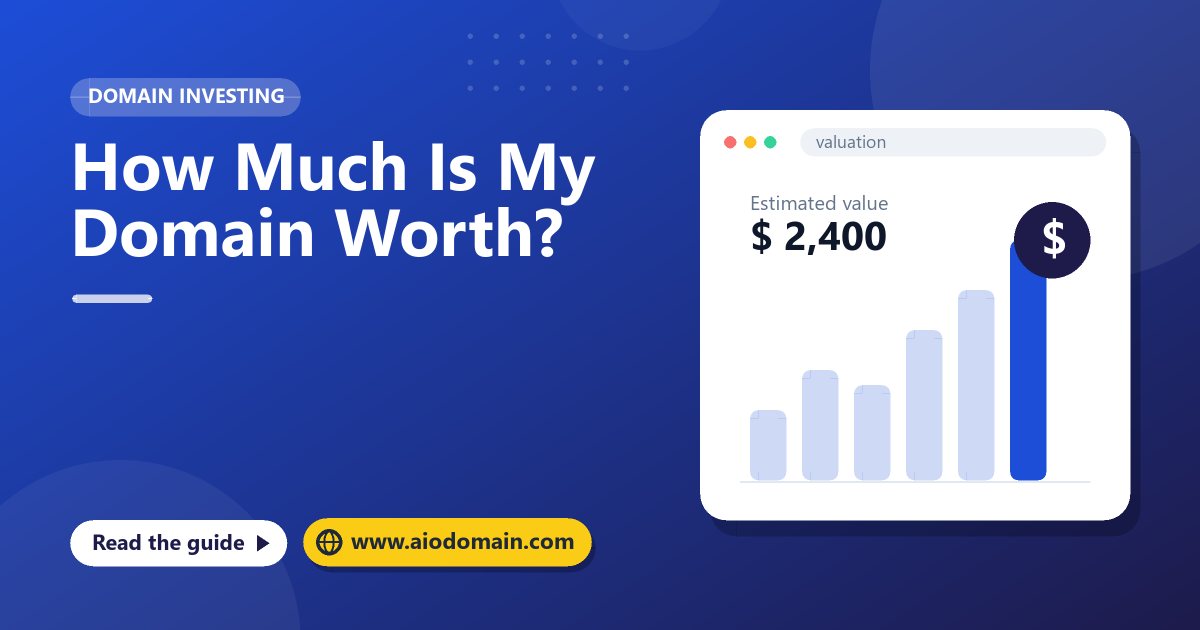
Every domain owner asks it sooner or later: what is my domain actually worth? There is no official price list. A domain is worth what a buyer will pay, and buyers pay for names that save them money, earn them traffic or make their brand easier to remember. The ten factors below are what professional investors and brokers look at first.
Key takeaways
- Short, memorable names in trusted extensions command the highest prices.
- Comparable sales are the strongest evidence of value.
- Automated valuations are a starting point, not a guarantee.
- A name is worth most to the buyer whose business it fits perfectly.
1. Length
Shorter names are easier to remember, type and print. One-word and two-word names in a strong extension are scarce, so they sell for much more than long phrases. Every extra character, and especially every hyphen, lowers value.
2. The extension (TLD)
.com is still the default in most people's minds, so the same word usually sells for far more in .com than in any other extension. Country codes such as .de, .co.uk or .in are strong inside their own countries. Newer extensions like .io and .ai have real markets in technology. See our comparison of .com and the newer extensions.
3. Real words and commercial keywords
Dictionary words, and especially words that describe something people spend money on (insurance, loans, hotels, software), are in demand. A keyword that advertisers pay for in search ads usually signals a domain end users will pay for too.
4. Brandability
Not every valuable name is a dictionary word. Invented names that are short, easy to say and spell, and that sound like a company, are bought by startups every day. Ask yourself: could this be the name on an app icon?
5. Comparable sales
The best evidence of value is what similar names actually sold for. Look for sales of names with the same length, extension, keyword type and age. On AIODomain you can browse recently sold domains to see real prices from the marketplace.
6. Search demand and traffic
A name that matches what people search for, or that already receives type-in traffic, has measurable value. Existing visitors to a parked page or an old website can be a strong selling point. Ask the seller for traffic data and check it.
7. Age and history
An older registration does not raise value on its own, but a clean history does. A domain that was used for spam or malware may be blocked by filters and search engines. Check the archive of past websites before you buy.
8. Pronunciation and the radio test
If you say the name out loud, can the listener type it correctly? Names that fail the "radio test" because of odd spellings, numbers or silent letters lose value.
9. Number of possible buyers
A generic name such as a single common word can be sold to thousands of businesses. A very specific name might suit only a handful of companies. The bigger the pool of likely buyers, the faster and higher a name sells.
10. Legal risk
A domain that contains a trademark is worth nothing to a legitimate buyer and can be lost in a dispute. Steer clear of brand names, even with small spelling changes.
How to estimate value in practice
| Step | What to do |
|---|---|
| 1 | Run the name through our free valuation tool for an automated estimate. |
| 2 | Find three to five comparable sales. |
| 3 | List the likely buyers and what the name would do for them. |
| 4 | Adjust for length, extension, risk and traffic. |
| 5 | For a high-value name, ask a broker for a considered opinion. |
Wholesale value vs end-user value
Investors talk about two prices. The wholesale price is what another investor would pay today to resell later. The end-user price is what a business that needs the name will pay, and it is often many times higher. If you need cash quickly, expect wholesale. If you can wait for the right buyer, list at an end-user price with a sensible minimum offer.
Frequently asked questions
Are free domain appraisals accurate?
They are useful for a first impression and for spotting names that are clearly worth little. They cannot know who might need the name tomorrow, so treat them as an estimate, not a price tag.
Does the price I paid matter?
Not to buyers. A domain registered for a few dollars can be worth thousands, and one bought at a high price can be worth less today.
Should I renew a domain that nobody has made an offer on?
Weigh the renewal fee against an honest estimate of value and how long a sale may take. Our guide to building a domain portfolio explains how investors decide.