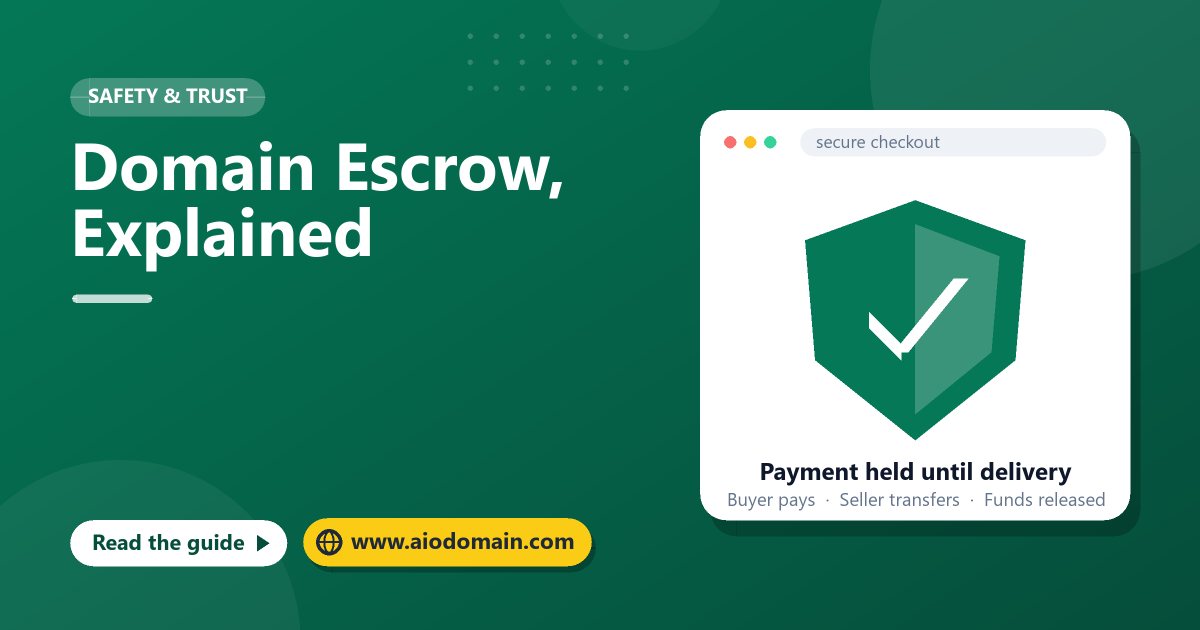
In any private sale, someone has to go first. If the buyer pays first, they risk never receiving the domain. If the seller transfers first, they risk never being paid. Escrow solves this by putting a trusted third party in the middle, holding the money until the domain has changed hands.
Key takeaways
- The escrow service holds the buyer's payment; the seller transfers only after the payment is secured.
- The money is released only when the buyer confirms the domain is in their account.
- Use only licensed escrow providers, opened from the marketplace, never a link from a stranger.
- Agree who pays the fee before you start.
How domain escrow works, step by step
- Agreement. Buyer and seller agree on the domain, the price, who pays the escrow fee and the transfer method.
- Payment. The buyer pays the escrow provider, not the seller.
- Verification. The provider confirms the funds have cleared and tells the seller to transfer.
- Transfer. The seller pushes the domain or hands over the authorisation code.
- Inspection. The buyer checks that the domain is in their account and under their control.
- Release. The buyer confirms, and the provider pays the seller.
Marketplace checkout vs third-party escrow
On AIODomain, a Buy Now purchase or an accepted offer goes through the marketplace checkout, which already holds the payment until the buyer confirms delivery. For larger deals, or when both sides want it, a transaction can use an external licensed escrow provider connected to the marketplace. The provider holds the funds in its own regulated account; the marketplace only tracks the status. Read our buyer protection rules for the details.
What does escrow cost?
Escrow providers charge a percentage of the price, often with a minimum fee, and it usually falls as the price rises. Payment method matters too: bank wires are cheaper for large amounts, cards cost more. Agree in writing whether the buyer, the seller or both pay the fee.
How long does it take?
| Stage | Typical time |
|---|---|
| Buyer payment clears | Minutes for cards, one to five business days for wires |
| Push at the same registrar | Minutes to a day |
| Transfer between registrars | Usually five to seven days |
| Buyer inspection | A few days, set by the transaction terms |
How to spot a fake escrow site
Fake escrow is one of the most common domain scams. The "buyer" or "seller" insists on a specific escrow site you have never heard of, sends you a link, and the site looks professional but is controlled by the scammer.
- Never use an escrow link sent by the other party. Start the transaction from the marketplace or type the provider's address yourself.
- Check that the provider is licensed, and how long its domain has existed.
- Be suspicious of urgency, unusual payment methods and tiny spelling differences in the site address.
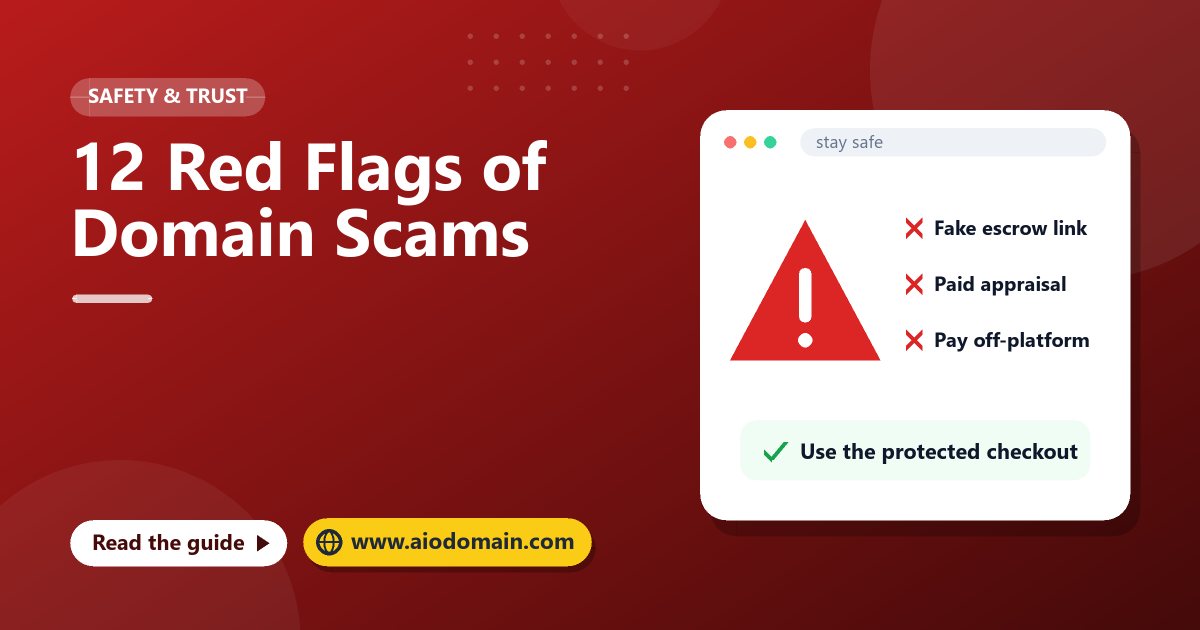
Our article on domain name scams lists the other red flags.
Disputes
If something goes wrong, for example the domain arrives without the promised control or the seller never transfers, the escrow provider or the marketplace investigates before any money moves. Keep every message on the platform; it is your evidence.
Frequently asked questions
Is escrow necessary for a small sale?
For small amounts the marketplace checkout gives the same protection without a separate escrow fee. Never skip protection entirely to save a few dollars.
Can I use escrow with a buyer I found outside the marketplace?
Yes. Ask them to make an offer on your listing so the deal runs through the platform, or open an escrow transaction with a licensed provider you chose.
Who owns the domain during escrow?
The seller does until the transfer completes. The buyer owns it from the moment it is in their account, even before the funds are released.